
Chiang Mai
Chiang Mai is Northern Thailand’s cultural capital, offering temples, mountain scenery, artisan markets, and a relaxed, creative local vibe.
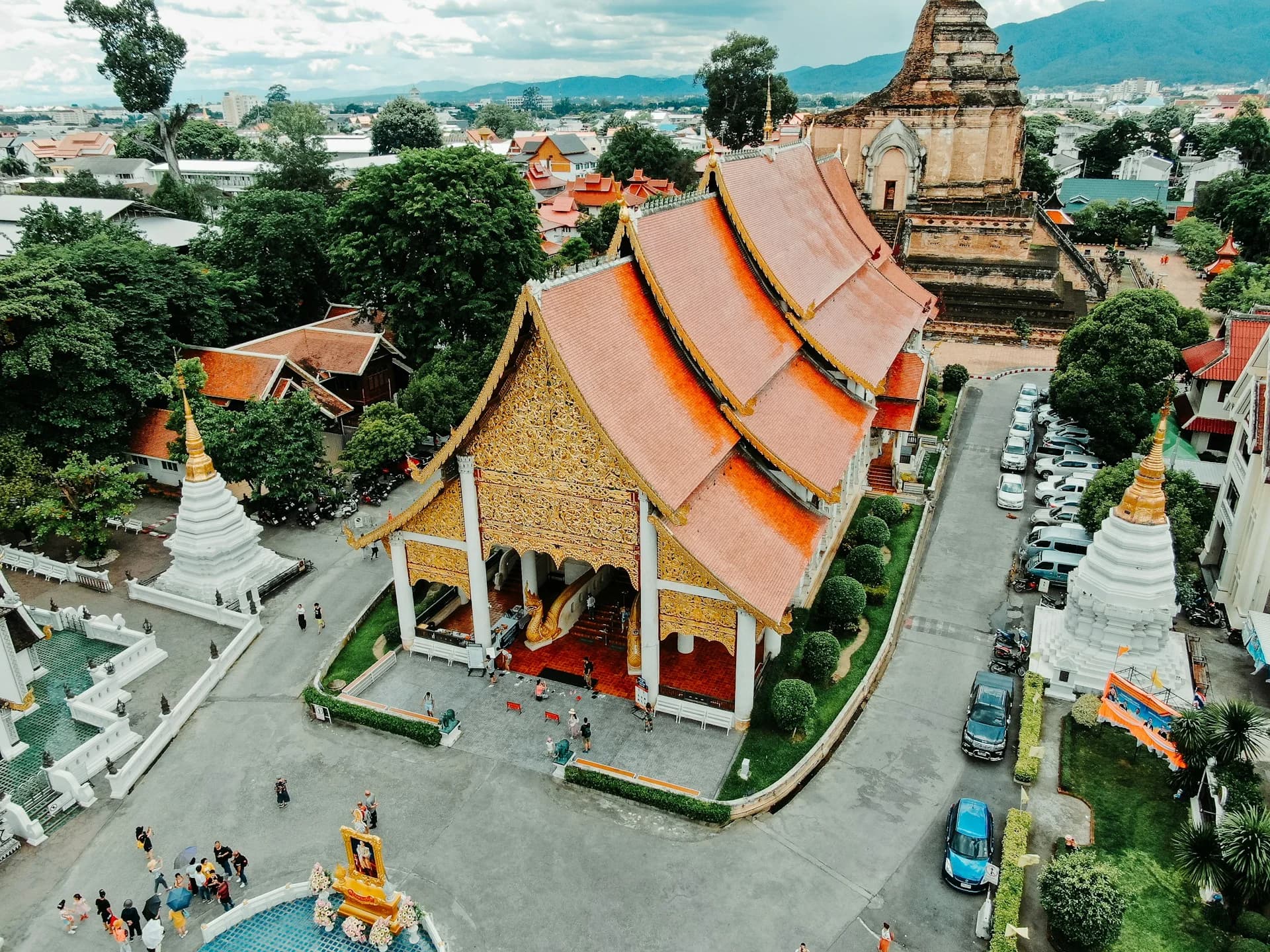
Highlights
- The Old City walls, moat, and over 300 temples including Wat Phra Singh and Wat Chedi Luang
- Doi Suthep temple overlooking the city
- Doi Inthanon National Park, waterfalls, and mountain villages
- Night markets: Sunday Walking Street, Saturday Night Market, and the Night Bazaar
- Thai cooking classes, craft workshops, and local coffee culture
Chiang Mai is Northern Thailand’s cultural heart, known for its mountain scenery, historic temples, creative café culture, and relaxed pace of life. Often called the “Rose of the North,” it blends traditional Lanna heritage with a modern, artistic edge, making it a favourite base for longer stays and slow travel.
The compact Old City, still outlined by a moat and remains of ancient walls, is big enough to explore but small enough to feel intimate. Visitors come for iconic temples like Wat Phra Singh and Wat Chedi Luang, colourful night markets, Thai cooking classes, massage schools, and easy access to nearby national parks. Whether your Chiang Mai travel style is culture-focused, food-oriented, or nature-driven, the city has something comfortable and approachable for first-time visitors.
Beyond the city, the region is surrounded by mountains, waterfalls, village communities, and national parks such as Doi Suthep–Pui and Doi Inthanon, Thailand’s highest peak. Day trips range from ethical elephant sanctuaries and jungle hikes to hot springs and craft villages. Cafés, coworking spaces, and an international community give Chiang Mai a creative, laid-back atmosphere that many travellers end up extending their stay for.
Chiang Mai weather is generally cooler and less humid than Thailand’s southern islands, especially in the cool season from November to February. Because the city is well connected by flights, trains, and buses, it’s an easy addition to almost any Thailand itinerary and a natural hub for exploring the wider north.
Wondering how to get to Chiang Mai? Here are the main Chiang Mai travel routes most visitors use:
By Air
Chiang Mai International Airport (CNX) is located about 10–15 minutes by car from the Old City, making arrivals and departures very convenient.
- Frequent domestic flights from Bangkok (Suvarnabhumi – BKK, Don Mueang – DMK), as well as from popular destinations like Phuket, Krabi, Hat Yai, and Koh Samui (often via Bangkok).
- International flights connect Chiang Mai with cities such as Singapore, Kuala Lumpur, Taipei, Hong Kong, Seoul and seasonal routes from parts of China and other regional hubs.
- Airlines commonly serving Chiang Mai include Thai Airways, Thai Vietjet, Bangkok Airways, AirAsia, Nok Air, Lion Air, Scoot, and others, depending on the season.
By Train
Travelling by train is a classic way to get to Chiang Mai from Bangkok.
- Trains depart from Bangkok’s main stations (service has moved from the old Hua Lamphong station to newer hubs such as Krung Thep Aphiwat, with some routes still connecting via Hua Lamphong depending on schedules).
- Overnight sleeper trains are popular for comfort and to save on accommodation, while daytime trains offer scenic views during the final stretch into the mountains.
- Typical journey time is around 10–13 hours, depending on the train class and timetable.
By Bus
Buses are a common budget option for getting to Chiang Mai.
- From Bangkok, buses to Chiang Mai depart mainly from Mochit (Chatuchak) Bus Terminal.
- Options include standard, First Class, and VIP/overnight buses with reclining seats and air conditioning.
- Travel time is usually around 9–11 hours, depending on traffic and service.
Combined Tickets
Many agencies and online platforms sell combined tickets that simplify long-distance travel to Chiang Mai.
- Train + bus or bus + minivan combinations are common when coming from other northern or central provinces.
- From southern Thailand and the islands (like Phuket, Krabi, Koh Samui, Koh Phangan, or Koh Tao), agencies often arrange ferry + bus + flight or ferry + bus + train combinations with coordinated timings.
- These “all-in-one” tickets are popular with backpackers and visitors who prefer not to book each Chiang Mai transport leg separately.
Understanding Chiang Mai weather will help you choose the best time for your trip.
Climate Overview
Chiang Mai has a tropical savanna climate with three main seasons: cool, hot, and rainy. Temperatures across the year usually range from about 15–36°C (59–97°F), with cooler nights in the cool season and hotter afternoons from March to May.
Seasons
- Cool Season (November–February)
Clear skies, cooler mornings, and comfortable daytime temperatures. This is peak season for Chiang Mai travel and the most pleasant time to explore on foot or by motorbike. - Hot Season (March–May)
Hot, dry weather with strong sun and higher daytime temperatures. This period often overlaps with the region’s agricultural “burning season” (usually February–April), when air quality and visibility can be reduced due to smoke from crop burning. - Rainy Season (June–October)
Warm and humid with regular showers, most often in the afternoon or evening. Landscapes are lush and green, and crowds are smaller, though you should expect wet conditions on some days.
Best Time for Activities
- November to February is generally the best period for sightseeing, hiking, temple visits, and markets—days are mild and evenings can be pleasantly cool.
- June to early October is great for travellers who don’t mind some rain and want greener scenery, lower prices, and fewer tourists.
- If you are sensitive to smoke or reduced visibility, it is wise to check current air quality and avoid the peak burning period in late February and March when planning Chiang Mai travel.
Getting around Chiang Mai is straightforward thanks to a mix of local Chiang Mai transport options that cover both the Old City and surrounding areas.
Taxis & Ride-Hailing
- Grab (a popular ride-hailing app in Southeast Asia) is widely used for getting around the city and to/from the airport.
- Metered taxis exist but are less common than in Bangkok; many trips are negotiated at a fixed price.
Red Trucks (Songthaews)
- Red songthaews are Chiang Mai’s most iconic local shared transport option.
- You can flag them down on the street; some follow loose routes, while others can be chartered for a private ride.
- They are generally inexpensive, but fares should be confirmed before you hop in if you’re not on a standard route.
Tuk-tuks
- Available mainly in central and tourist areas for short trips.
- Always agree on the fare before starting the journey, as they do not use meters.
Scooter & Motorbike Rentals
- Popular for exploring outside the Old City and reaching viewpoints, cafes, and temples on the hills.
- Only recommended for confident riders; traffic in some areas and mountain roads can be challenging.
- Helmets are required by law, and police checkpoints are common—carry your licence and rental documents.
Bicycles
- Suitable for the relatively flat Old City, where streets are slower and more compact.
- Less comfortable on busy ring roads, where traffic is faster and there are fewer cycle lanes.
Rental Cars
- A good option for families or groups planning day trips to Doi Suthep, Doi Inthanon, Mae Rim, Mae Sa, or hot springs.
- Roads are generally in good condition, but mountain routes have sharp curves and steep sections—drive carefully, especially in wet weather.
Timing & Crowds
- November–February is peak season; book popular hotels and experiences in advance.
- Major festivals such as Loy Krathong / Yi Peng (usually in November) draw large crowds and higher prices but offer a memorable cultural experience.
- Rainy season brings fewer tourists and a more relaxed pace, though you should factor in occasional showers for day trips.
- The burning season (often February–April) can affect air quality; check current conditions if you plan outdoor activities or have respiratory sensitivities.
What to Pack
- Light, breathable clothing and comfortable walking shoes or sandals.
- A light jacket or sweater for cool mornings and evenings in the cool season.
- Rain jacket or compact umbrella if visiting during the rainy months.
- Sunscreen, hat, and insect repellent.
- Modest clothing (long pants/skirts and covered shoulders) for temple visits.
- A reusable water bottle to stay hydrated while exploring.
Cultural / Behaviour Tips
- Remove shoes and hats when entering temples and many indoor spaces; dress modestly and behave quietly in sacred areas.
- Avoid pointing your feet at Buddha images or people; sit with legs tucked to the side or behind you in temples.
- Ask politely before photographing monks or locals, especially in religious contexts.
- Public displays of anger or frustration are frowned upon—keeping calm and respectful goes a long way.
Safety & Transport Advice
- If renting a scooter or car, take photos or video of any existing damage before leaving the rental shop.
- Wear a helmet at all times on motorbikes and avoid riding after heavy rain or late at night on unfamiliar roads.
- Keep belongings secure in crowded night markets and on busy streets.
- For trekking, elephant visits, or adventure activities, choose operators focused on safety and ethical practices.
Food & Insider Recommendations
- Try Northern Thai dishes such as khao soi, sai ua (herbal sausage), nam prik ong, and local curry noodle variations.
- Explore Nimmanhaemin Road and nearby lanes for specialty coffee shops, modern eateries, and dessert bars.
- Visit Warorot Market for local produce, snacks, textiles, and everyday Chiang Mai life.
- Plan evenings around the Sunday Walking Street and Saturday Night Market for handicrafts, street food, and a lively atmosphere.
- For a relaxed end to the day, consider sunset viewpoints at Doi Suthep or riverside restaurants along the Ping River.
Highlights
- The Old City walls, moat, and over 300 temples including Wat Phra Singh and Wat Chedi Luang
- Doi Suthep temple overlooking the city
- Doi Inthanon National Park, waterfalls, and mountain villages
- Night markets: Sunday Walking Street, Saturday Night Market, and the Night Bazaar
- Thai cooking classes, craft workshops, and local coffee culture