
Koh Phi Phi
Iconic tropical islands with dramatic cliffs and turquoise waters
Highlights
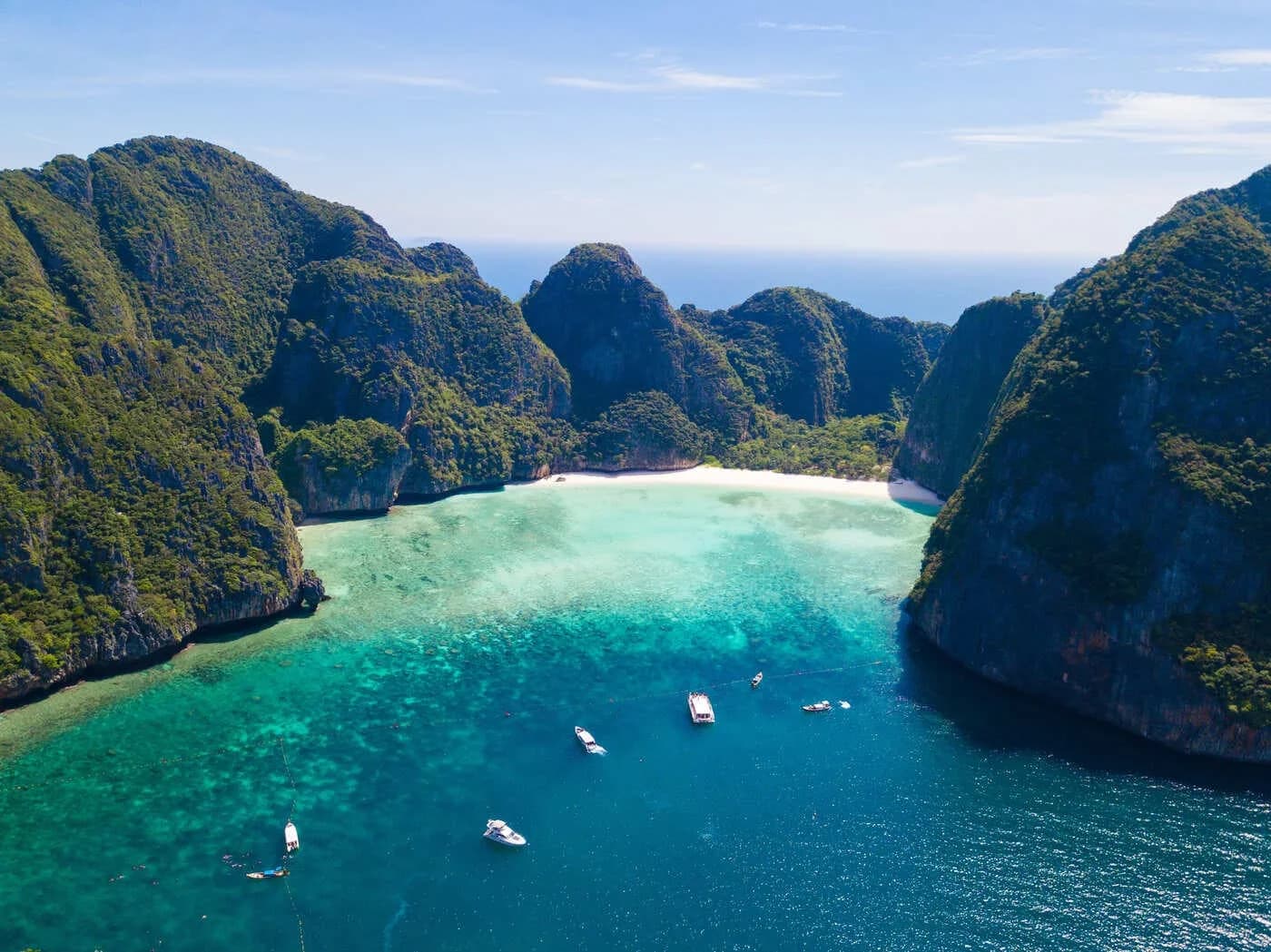
- Maya Bay (Phi Phi Leh) – world-famous cove surrounded by limestone cliffs
- Pileh Lagoon & Viking Cave – emerald lagoon and dramatic rock formations ideal for swimming and boat trips
- Phi Phi Viewpoints – short uphill hikes with panoramic views over the twin bays of Phi Phi Don
- Long Beach & Laem Tong Beach – quieter beaches with clear water and great snorkeling
- Snorkeling & diving – colorful reefs, reef sharks, turtles, and excellent underwater visibility
- Sunset bars & nightlife – fire shows, beachfront bars, and energetic party spots around Tonsai and Loh Dalum
- Island-hopping tours – day trips to Bamboo Island, Mosquito Island, and other Andaman highlights
Koh Phi Phi is one of Thailand’s most famous island groups, known for its dramatic limestone cliffs, turquoise bays, and lively beach-town atmosphere. Located in the Andaman Sea between Phuket and Krabi, the archipelago includes several islands, with Phi Phi Don (the only inhabited island) and Phi Phi Leh (home to Maya Bay) as the main highlights. For many visitors, Koh Phi Phi travel is all about combining picture-perfect scenery with relaxed beach time and boat trips.
The main village area on Phi Phi Don sits on a narrow sand isthmus between two bays, with walking lanes lined by guesthouses, cafés, dive shops, and bars. There are no cars or public roads on the island, so everything is reached on foot or by longtail boat, which gives Koh Phi Phi a more intimate and pedestrian-friendly feel. A little further out, areas like Laem Tong Beach, Long Beach, and Loh Moo Dee offer quieter stays with easy access by boat or walking paths.
Just south, uninhabited Phi Phi Leh lies inside a protected national park and is famous for Maya Bay, Pileh Lagoon, and towering limestone walls that rise straight from the sea. Access is strictly controlled to protect the environment, with national park rules and limited visitor numbers, but it remains one of Thailand’s most iconic seascapes and a highlight of most boat tours.
With its combination of beaches, viewpoints, snorkeling, rock climbing, and nightlife, Koh Phi Phi attracts everyone from backpackers to honeymooners. Warm Koh Phi Phi weather and regular ferries from Phuket, Krabi, and Koh Lanta make it easy to include in a wider Andaman Sea itinerary.
Wondering how to get to Koh Phi Phi? The islands have no airport, so all access is by boat from nearby mainland and island ports. Ferries and speedboats run year-round, with extra services during high season.
By Air (via Nearby Airports)
To reach Koh Phi Phi, you first fly to a nearby airport and then continue by road and boat:
- Phuket International Airport (HKT) – from the airport, travel by road to Rassada Pier in Phuket Town, then take a ferry or speedboat to Tonsai Pier on Phi Phi Don.
- Krabi International Airport (KBV) – from the airport, transfer to Klong Jilad Pier in Krabi Town or to Ao Nang/Nopparat Thara Pier, then continue by boat to Koh Phi Phi.
- Other southern airports – such as Trang, are sometimes used with overland transfers to Krabi or Phuket before continuing by ferry.
By Ferry & Speedboat
Regular boats connect Koh Phi Phi with major Andaman hubs:
- Phuket → Koh Phi Phi (Tonsai Pier) – ferries and speedboats depart mainly from Rassada Pier, with typical travel times around 1.5–2 hours.
- Krabi → Koh Phi Phi – ferries leave from Klong Jilad Pier in Krabi Town and from Ao Nang/Nopparat Thara, usually taking about 90–120 minutes.
- Koh Lanta → Koh Phi Phi – seasonal ferries operate mainly in high season, often taking 60–90 minutes depending on the boat and sea conditions.
Most services arrive at Tonsai Pier on Phi Phi Don, the main entry point with porters and handcarts to help move luggage through the car-free village.
Combined Tickets
For smoother Koh Phi Phi travel, many agencies and online platforms sell combined tickets that bundle land and sea legs:
- Minivan + ferry packages from Phuket, Krabi, Ao Nang, Railay, and Koh Lanta.
- Bus + ferry from further afield, for example Bangkok to Krabi or Phuket and then onward to Phi Phi.
- Flight + transfer + ferry options, often arranged by hotels or local tour operators from Phuket and Krabi airports.
These combined options coordinate timings so you do not need to arrange each separate leg yourself.
Understanding Koh Phi Phi weather helps you choose the right season for beaches, snorkeling, and boat excursions.
Climate Overview
Koh Phi Phi has a tropical monsoon climate with warm temperatures year-round, typically around 27–32°C. The Andaman Sea side of Thailand has a clear dry and wet season pattern.
Seasons
- Dry Season (November–April) – generally the best time to visit, with more sunshine, calmer seas, and lower rainfall. Ideal for island-hopping, diving, and snorkeling.
- Hot Season (March–May) – temperatures and humidity rise, but sea conditions are often still good. Great for swimming and boat trips if you are comfortable with heat.
- Rainy Season (May–October) – more frequent showers and occasional rough seas, with the heaviest rain often in September–October. There are still sunny breaks between showers and fewer crowds on the islands.
Best Time for Activities
- Snorkeling & island tours: November–April, when the sea is usually calmest.
- Diving: generally good year-round, with visibility and sea conditions typically more reliable during the dry season.
- Hiking & viewpoints: December–March, when humidity is slightly lower.
- Best value & fewer crowds: shoulder months like late April, May, and October.
Koh Phi Phi transport is unique because there are no cars, buses, or motorbike taxis on the main island. Everything moves at a pedestrian pace, which is a big part of the appeal.
Walking
- The main village areas around Tonsai and Loh Dalum are completely walkable, with narrow lanes for pedestrians and handcarts.
- Paths and stairways lead up to the famous viewpoints; expect short but steep hikes and many steps.
Longtail Boats & Water Taxis
- Longtail boats act as water taxis connecting Tonsai with Long Beach, Laem Tong, Loh Moo Dee, and nearby coves.
- They also run private and shared trips to Phi Phi Leh, Bamboo Island, and other snorkeling spots.
- Prices are usually per boat and vary by distance and time of day; always agree on a fare before departure.
Carts & Porters
- Since there are no cars, luggage is moved by pushcarts and porters between Tonsai Pier and accommodation.
- Many hotels arrange staff to meet arriving boats and help with bags, and small tips are appreciated.
Boats for Remote Resorts
- Resorts at Laem Tong and some more secluded beaches use scheduled or on-demand longtail or speedboat transfers for arrivals and departures.
- Always confirm boat times with your hotel, especially in low season when services can be affected by sea conditions.
A few useful Koh Phi Phi tips will help you make the most of your stay, from timing and packing to respecting local rules and the marine environment.
Timing & Crowds
- December–February is peak season, with busier boats, higher prices, and crowded bays.
- November and March–April often have great conditions with slightly fewer visitors than mid-peak.
- Low season (May–October) is quieter and cheaper, but some tours may be rescheduled or cancelled if seas are rough.
- Maya Bay now has strict visitor limits and may occasionally close for conservation; check current rules before planning your day trip.
What to Pack
- Light, breathable clothing and swimwear.
- Reef-safe sunscreen and a hat for strong sun on boat days.
- Waterproof bag or dry pouch for phones and valuables.
- Comfortable sandals plus shoes with some grip for viewpoints and rocky paths.
- Reusable water bottle to reduce plastic waste on the islands.
Cultural / Behaviour Tips
- Dress modestly (shoulders and knees covered) when visiting temples or local communities on the mainland before or after your island stay.
- On the beach, swimwear is fine, but topless sunbathing or nudity is not widely accepted.
- Help protect the national park: do not take sand or shells, do not feed fish, and avoid touching coral or marine life.
- Keep music volume low late at night away from the main party zones, especially near family-oriented or quieter resorts.
Safety & Transport Advice
- Follow crew instructions on boats and wear life jackets when advised, particularly during the rainy season.
- Stay hydrated and use sun protection; the combination of heat, humidity, and reflection from the water can be intense.
- When swimming or snorkeling, be mindful of boat traffic and stay within designated areas.
- Parties and alcohol are common; keep an eye on your belongings and avoid swimming at night or after heavy drinking.
Food & Insider Recommendations
- Try classic Thai dishes like pad thai, massaman curry, som tam, and grilled seafood at local restaurants in the village.
- Look for small beachfront eateries on Long Beach and Laem Tong for quieter meals with sea views.
- Fresh fruit shakes, roti stands, and snack stalls are easy to find around Tonsai and Loh Dalum.
- Sunset bars on the Loh Dalum side and at elevated viewpoints offer great photo spots and relaxed evening vibes.
- For early mornings, bakeries and coffee shops near the pier are convenient before boat tours and transfers.
Highlights
- Maya Bay (Phi Phi Leh) – world-famous cove surrounded by limestone cliffs
- Pileh Lagoon & Viking Cave – emerald lagoon and dramatic rock formations ideal for swimming and boat trips
- Phi Phi Viewpoints – short uphill hikes with panoramic views over the twin bays of Phi Phi Don
- Long Beach & Laem Tong Beach – quieter beaches with clear water and great snorkeling
- Snorkeling & diving – colorful reefs, reef sharks, turtles, and excellent underwater visibility
- Sunset bars & nightlife – fire shows, beachfront bars, and energetic party spots around Tonsai and Loh Dalum
- Island-hopping tours – day trips to Bamboo Island, Mosquito Island, and other Andaman highlights