
Koh Tao
Koh Tao is a small tropical island famous for world-class diving, affordable PADI courses, and a relaxed, beachy atmosphere.
Highlights
- Sairee Beach – the island’s longest and most social beach
- Koh Nang Yuan – a postcard-perfect island with a famous viewpoint
- Chumphon Pinnacle – top dive site for schooling fish, barracuda, and occasional whale sharks
- Japanese Gardens & Mango Bay – great snorkeling spots with calm, clear water
- John-Suwan Viewpoint – panoramic views over two turquoise bays
- Tanote Bay – rugged beauty ideal for snorkeling and rock jumping
- PADI & SSI dive certifications – some of the cheapest and most popular in the world
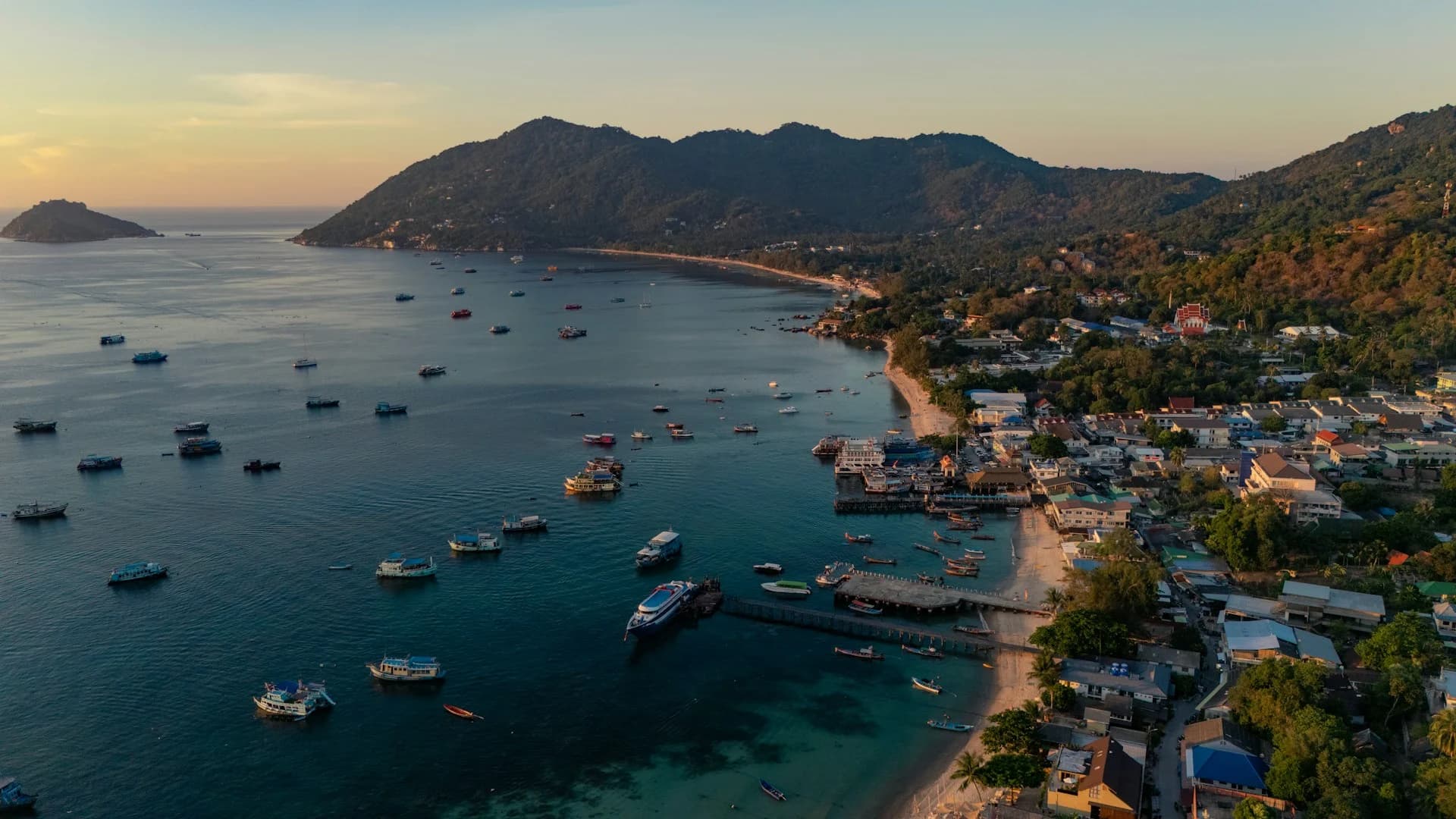
Koh Tao is Thailand’s compact but world-famous diving island, known for its clear turquoise water, colorful coral reefs, and easygoing, social atmosphere. Sitting in the Gulf of Thailand just north of Koh Phangan, the island attracts travellers who want a balance of adventure, relaxation, and community. For many visitors, Koh Tao travel is all about spending days on the water and evenings watching the sunset from beach bars along Sairee.
The island is one of the most popular and affordable places in the world to learn scuba diving. Dozens of reputable dive schools offer PADI and SSI courses at competitive prices, making Koh Tao a top choice for getting certified on a budget. Calm, warm waters and beginner-friendly sites mean first-time divers feel comfortable, while more experienced divers can explore deeper pinnacles, wrecks, and advanced sites around Chumphon Pinnacle, Southwest, and Sail Rock.
Away from the dive boats, Koh Tao still feels intimate and relaxed. Its small size makes it easy to explore by scooter or on foot, with bays, viewpoints, and quiet corners never far away. Sairee Beach is the social hub with restaurants and nightlife, while areas like Chalok Baan Kao, Tanote Bay, and Mango Bay are perfect for those who prefer quieter beaches, snorkeling, and nature.
With warm Koh Tao weather year-round, visitors spend their time snorkeling, hiking to viewpoints, island-hopping to nearby Koh Nang Yuan, and unwinding in simple bungalows or modern resorts. The island’s friendly vibe and strong diving community mean many people come for a few days and end up staying much longer than planned.
Wondering how to get to Koh Tao? The island does not have an airport, so all routes involve a ferry connection from nearby ports and islands.
By Air (via Nearby Airports)
To reach Koh Tao by air, you’ll first fly to a nearby airport and then continue overland and by sea:
- Samui Airport (USM) – the closest option. From Koh Samui, high-speed boats and ferries run directly to Koh Tao via Koh Phangan or direct routes, depending on the operator.
- Surat Thani Airport (URT) – a popular budget route. Shuttle buses connect the airport to mainland piers (often Donsak), where ferries continue to Koh Phangan and Koh Tao.
- Chumphon Airport (CJM) – a common northern gateway. Transfers from the airport bring you to Chumphon pier, where high-speed catamarans head directly to Koh Tao.
By Ferry
Ferries are the only way to arrive directly on Koh Tao, with multiple daily departures:
- Chumphon → Koh Tao – one of the shortest sea crossings, usually around 1.5–3 hours depending on the boat type.
- Koh Samui / Koh Phangan → Koh Tao – regular and high-speed boats, often taking 1.5–3 hours with some routes stopping at multiple islands.
- Surat Thani (Donsak Pier) → Koh Tao – longer routes that typically combine bus and ferry, often transiting via Koh Phangan or Koh Samui.
Well-known operators include Lomprayah, Seatran Discovery, Songserm, and Marine Passion, offering a range of speeds and comfort levels.
Combined Tickets
For convenient Koh Tao travel, combined tickets help coordinate your journey:
- Bus + ferry from Bangkok, Hua Hin, Phuket, Krabi, and other mainland hubs, including overnight bus options.
- Train + ferry via Surat Thani or Chumphon, with popular overnight sleeper trains from Bangkok followed by a ferry connection.
- Flight + ferry bundles via Samui, Surat Thani, or Chumphon airports, sold through airlines or travel agents.
These combos simplify connections, so you don’t need to arrange each part of the trip separately.
Understanding Koh Tao weather is important for planning ideal diving conditions, beach days, and viewpoint hikes.
Climate Overview
Koh Tao has a warm tropical climate all year, with average temperatures usually between 27–33°C (80–91°F). Sea temperatures stay welcoming for swimming and diving in every season.
Seasons
- Dry Season (December–April) – typically the sunniest period with calm seas and low rainfall. Great for diving, snorkeling, and long beach days.
- Hot Season (May–September) – warmer and more humid, but still offers many clear days. Sea conditions are often excellent for diving, with good visibility at many sites.
- Rainy Season (October–November) – heavier rains and occasional rougher seas can occur, but diving often continues when conditions are safe. This is a quieter time with fewer visitors.
Best Time for Activities
- Diving & PADI courses: generally good all year, with many divers preferring March–September for visibility.
- Snorkeling: February–September, when seas are often calmer and clearer.
- Viewpoints & hiking: December–June, when trails are drier and views are often clearer.
- Best value & fewer crowds: May–June and parts of September–October, outside peak holiday periods.
Koh Tao transport is straightforward thanks to the island’s small size and simple road network.
Taxis & Songthaews
- Pickup-truck taxis run between Mae Haad (the main pier), Sairee Beach, Chalok, and other key areas.
- Prices are usually fixed by route and can be higher at night or for steeper, more remote roads.
Scooters
- The most common way to explore Koh Tao, giving access to viewpoints, bays, and quiet roads.
- Some roads are steep, narrow, or unpaved, so scooters are recommended only if you are a confident rider.
- Always wear a helmet, check the brakes and tyres, and drive slowly, especially on downhill sections.
Walking
- Koh Tao is small enough that Sairee, Mae Haad, and Chalok areas are easily explored on foot.
- Many viewpoints and some beaches require short walks or hikes uphill, so comfortable footwear is useful.
Boats & Water Taxis
- Longtail boats connect the main beaches with remote bays like Mango Bay, Shark Bay, Tanote Bay, and Hin Wong.
- Prices depend on distance and sea conditions; always agree on a fare before departure and check return options.
A few key Koh Tao tips will help you get the best out of the island, especially if you’re here to dive or complete your PADI course.
Timing & Crowds
- December–March and July–August are the busiest periods, especially for divers and holidaymakers.
- Shoulder seasons like May–June and September often have good conditions and fewer people on boats and beaches.
- If planning a PADI course, allow a few extra days in case of weather changes, scheduling, or if you want to continue to advanced levels.
What to Pack
- Light, breathable clothing and plenty of swimwear.
- Reef-safe sunscreen to protect the coral and marine life.
- A dry bag and waterproof phone case for boat trips and rainy days.
- Sturdy sandals or shoes for viewpoints and rocky paths.
- If diving, you can rent all equipment locally, but bringing your own mask or dive computer is a plus if you have one.
Cultural / Behaviour Tips
- Dress modestly when visiting temples or local areas in Mae Haad.
- Respect marine life — do not touch, chase, or feed fish, turtles, or sharks, and never stand on coral.
- Keep noise down in quieter bays at night; many visitors stay long-term and appreciate a peaceful environment.
Safety & Transport Advice
- Scooter accidents are common on Koh Tao; ride slowly, avoid sandy shoulders, and never drive after drinking.
- Choose reputable dive schools for PADI or SSI courses and always follow your instructor’s safety guidance.
- Stay hydrated and protect yourself from the sun, especially when out on boats all day.
- Check sea conditions before booking boat trips, particularly during the rainy season.
Food & Insider Recommendations
- Sairee Beach has the widest choice of restaurants, from Thai and seafood to Western and vegetarian options.
- Mae Haad offers many local Thai eateries and simple noodle shops at good value.
- Try beachfront BBQs and fresh grilled fish for a classic island dinner.
- Look for small cafés and juice bars tucked into side streets for breakfast bowls, smoothies, and coffee between dives.
- Many dive schools organize social nights and BBQs, which are great for meeting other travellers and long-term residents.
Highlights
- Sairee Beach – the island’s longest and most social beach
- Koh Nang Yuan – a postcard-perfect island with a famous viewpoint
- Chumphon Pinnacle – top dive site for schooling fish, barracuda, and occasional whale sharks
- Japanese Gardens & Mango Bay – great snorkeling spots with calm, clear water
- John-Suwan Viewpoint – panoramic views over two turquoise bays
- Tanote Bay – rugged beauty ideal for snorkeling and rock jumping
- PADI & SSI dive certifications – some of the cheapest and most popular in the world